From a spoken question to a printed page. From a classroom to a computer. Every new tool invites us to ask what learning could become.
Selected moments. An unfinished history.
This is a path through ideas that inform SILT’s work, alongside related perspectives. It is not a complete history: oral traditions, local knowledge, and educational contributions across cultures extend far beyond these moments.
c. 370 BCE
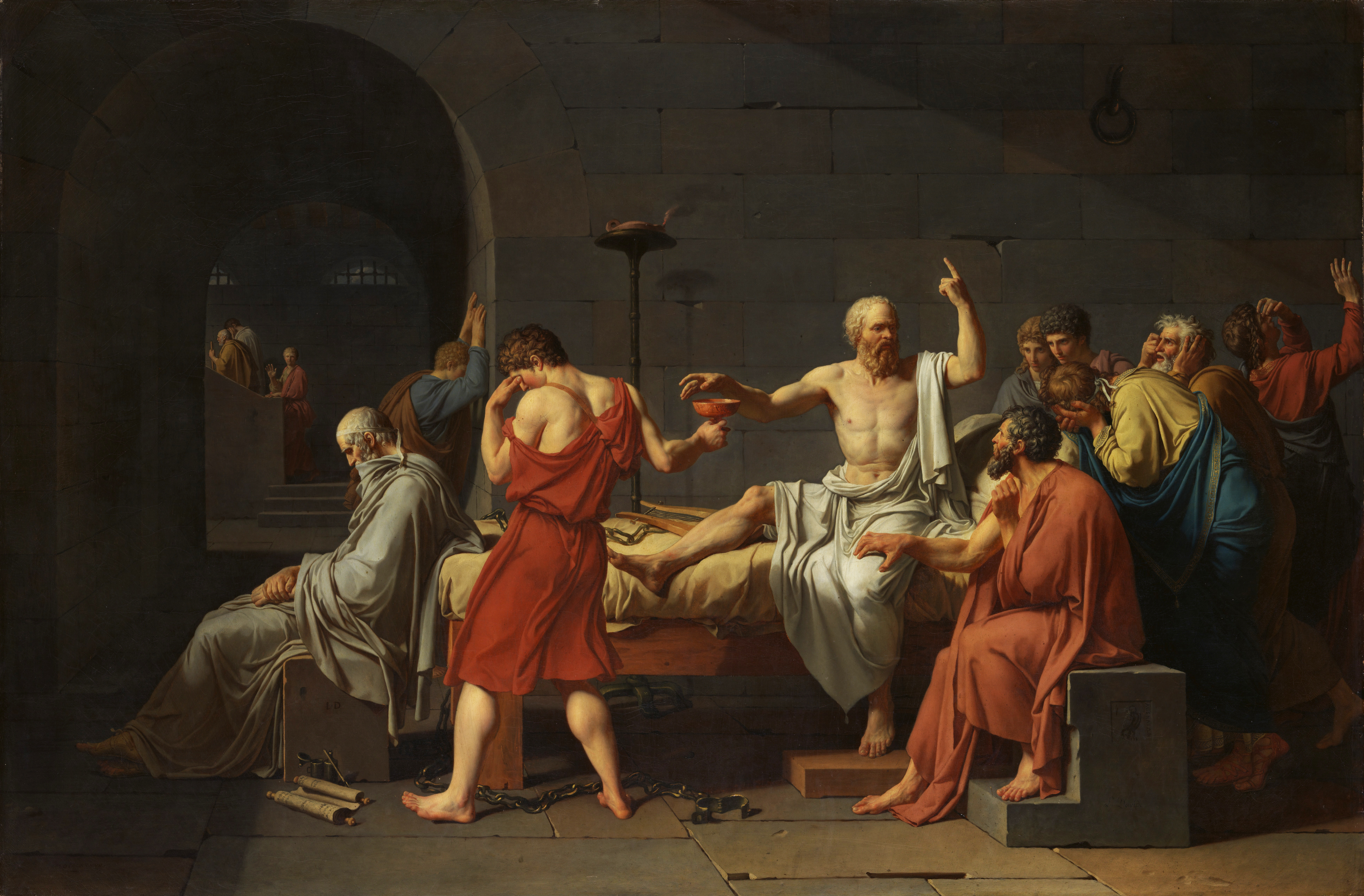
The Death of Socrates · Jacques-Louis David, 1787 · a later depiction of antiquity
Socrates, through Plato
A question can change a mind.
In Plato’s Phaedrus, Socrates asks what happens when people can repeat words without understanding them. The concern survives every new medium: access to knowledge and ownership of knowledge are different things.
The thread to SILT
SILT’s starting point: invite learners to explain their reasoning before offering the next answer.
Our story begins with a question. In Plato's Phaedrus, Socrates worries that people might repeat written words without developing understanding. This is one thread in a much wider history of learning. Across cultures, knowledge has travelled through conversation, apprenticeship, memory, and shared experience. Today, the same tension returns. When an answer is easy to obtain, how do we know that understanding belongs to the learner?
c. 1455
Gutenberg taking the first proof · 1869 engraving · Library of Congress
Johannes Gutenberg
Ideas learn to travel.
Gutenberg’s press helped expand the circulation of books in Europe. Printing and movable type had earlier histories in East Asia. As texts travelled further, the enduring challenge remained: turning what we read into what we understand.
The thread to SILT
SILT asks how wider access can be accompanied by opportunities to practise, question, and apply.
By the middle of the fifteenth century, Gutenberg's printing system was helping books circulate more widely in Europe. Printing and movable type already had histories in East Asia. This was a change in how ideas could travel, but a printed page could not notice when its reader was confused. Each expansion of access leaves another question behind. What support helps a person turn information into understanding?
1960
PLATO V terminal, 1981 · Mtnman79 · CC BY 3.0 · a later generation of the system
Donald Bitzer and the PLATO team
The screen begins to respond.
At the University of Illinois, PLATO brought lessons to computer terminals. Computing introduced new possibilities for interaction, practice, and feedback. The learner could do something, receive a response, and try again.
The thread to SILT
The next challenge: respond to a learner’s reasoning, not only whether an answer matches.
In 1960, Donald Bitzer and his collaborators began PLATO at the University of Illinois. The computer became a place to practise and receive feedback. The terminal shown here is a later generation, from 1981. A new relationship was emerging between a learner and a machine. But responding to an answer is only the beginning. Understanding why a learner gave that answer is a much harder problem.
1984
Archive motif: making knowledge available at scale
Benjamin Bloom
Personal attention. A shared ambition.
Bloom’s two-sigma paper asked how group instruction could approach the effectiveness of one-to-one tutoring. The studies he discussed made the promise of individual support hard to ignore. They did not establish a universal effect for every tutor, classroom, or AI system.
The thread to SILT
Personalised feedback at scale is SILT’s central research question, with educator workload measured alongside learning.
In 1984, Benjamin Bloom framed a lasting challenge. Could group instruction become as effective as one-to-one tutoring? His two-sigma paper described striking results in particular studies, not a guarantee for every learning system. For SILT, the question becomes practical. Can every learner receive timely, useful feedback, while educators gain time and insight? That is a hypothesis to investigate, and a responsibility to measure.
2006
Archive motif: dialogue, reflection, and the effort of remembering
Henry Roediger and Jeffrey Karpicke
Remembering is an act of learning.
Their published research examined how retrieving studied material can improve later retention. Active recall gives learners an opportunity to bring knowledge back, find gaps, and try again. Remembering also needs to connect with explanation and application.
The thread to SILT
The thesis combines active recall, Socratic questioning, and self-explanation in an adaptive tutoring workflow.
In 2006, Henry Roediger and Jeffrey Karpicke examined the learning benefits of retrieval. Bringing knowledge back from memory can strengthen later retention. Familiarity with a page is not the same as being able to explain an idea without it. This is part of the foundation of Esther Bawo Tsotso's thesis: an adaptive tutoring system that asks learners to recall, explain, and reflect, with neurodiversity as a core design consideration.
People behind the ideas
A conversation across time.
Explore the ideas individually. Each contribution opens a different way of thinking about the learner.
Questioning
Make room for a better question.
The thesis draws on Socratic questioning to invite explanation, examine assumptions, and expose gaps in understanding.
These realities coexist. For Africa and the Global South, the task is to understand what each school and community needs, and what it can sustain.
Access is part of the story. What happens after access matters, too.
SILT Research × SILT Labs
The next chapter is ours to investigate.
SILT Institute is an interdisciplinary research team in learning science and engineering. We explore AI as a safe, responsible, age-appropriate layer of support for secondary education and lifelong learning.
Our central question
How can every learner receive personal feedback at scale, while educators gain time and insight?
Learning science
Understanding that lasts.
Investigate recall, explanation, transfer, learner agency, and accessible interaction.
Human–AI interaction
Support that knows its place.
Explore feedback quality, age-appropriate guidance, oversight, and when a person should intervene.
Learning infrastructure
Built for the real classroom.
Study curriculum fit, connectivity, cost, teacher preparation, and educator workload.
From a thesis to a research programme
Esther Bawo Tsotso’s thesis proposes adaptive AI tutoring through Socratic questioning and active recall, with neurodiversity as a core consideration. It provides SILT’s starting questions and design foundation. The supplied document describes proposed evaluation and expected contributions; this site does not present them as demonstrated learning outcomes.
SILT Research
Questions before claims.
Define the questions, methods, boundaries, and evidence needed to understand what strengthens human learning.
Research directions and evidence↗
SILT Labs
Ideas tested with boundaries.
Build bounded prototypes, pilots, and learning systems that can challenge assumptions and generate better questions.
Applied inquiry and calibration↗
The measure: understanding, retention, transfer, accessibility, safety, and educator workload.
Revisit the story
Follow a thread.
Sources, image credits & audio
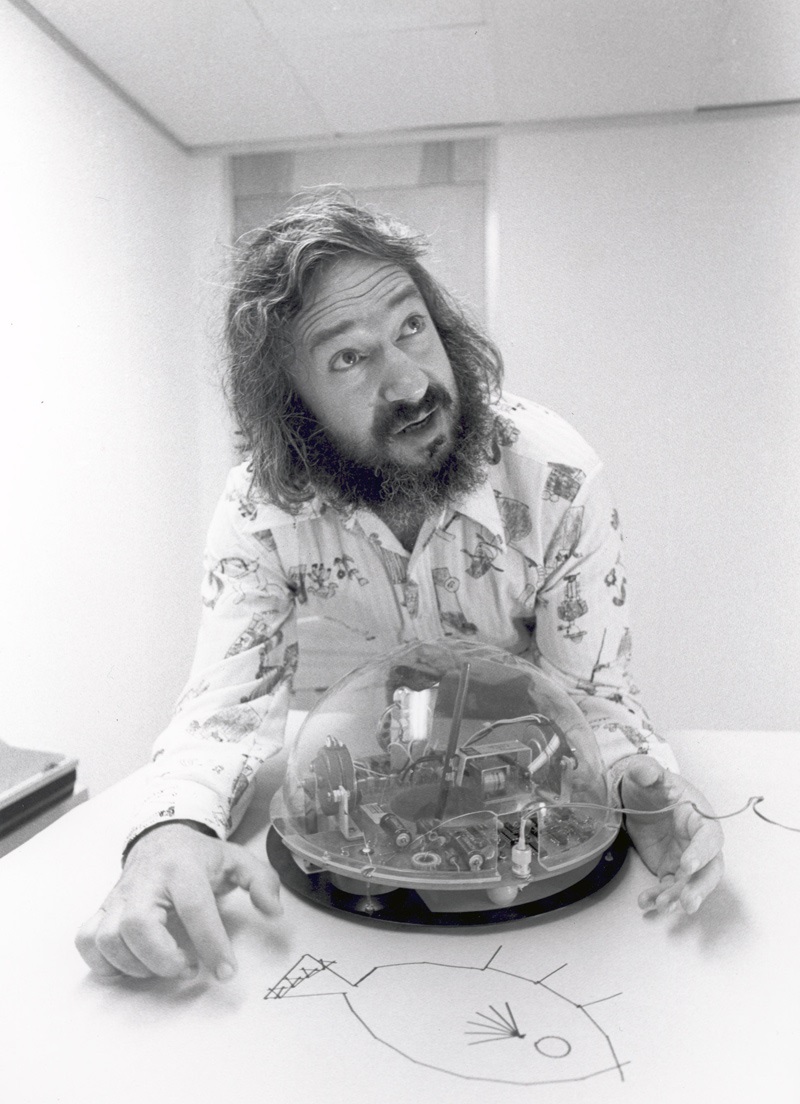
Historical chapter sources are linked within the story. The narrative draws on the supplied thesis and the original works linked above. Papert is included as related context. Audio is a synthetic narration of the transcripts provided here.


 time.
time.


